
At some point in your life, you have plans to invest some of your wealth. This practice is something that every adult in the UK may have considered one way or another. However, most of us don’t know how to get started. Since investment is not something usually taught in schools, people are left without even the most basic knowledge of the topic.
Thankfully, you have us at Consilium Asset Management to provide insightful, impartial, and independent investing advice to help you reach your financial goals. Contact us today to schedule a consultation
What is Investment Advice?
Investment advice is education, guidance, and recommendations that help a person understand an investment product or strategy. The advice can come from a professional, like our team of financial advisors. However, most people’s first experience with investment advice is through a friend, an internet forum, or conversations with someone who knows about the topic.
If you want investment advice that’s tailored to your goals, it’s best to work with experts like our financial advisors. We take a personalised approach knowing that no two investors are the same. Each person can have varying risk appetites, outlooks on sustainability, and financial situations. To meet each investor’s needs, we design portfolios customised for them.
Why not sign up for our monthly newsletter
Each month we send out our newsletter and our latest publication. We cover all aspects of financial planning. It’s free and you can unsubscribe any time.
Your Personal Finance Portal
Our clients have access to our Personal Finance Portal. Clients gain access to valuations, secure messaging as well as the ability to share documents. There is also the option to integrate open banking allowing our clients to see all their finances in one place.
Access to the Portal is available on desktop, tablet or mobile.
Watch our video.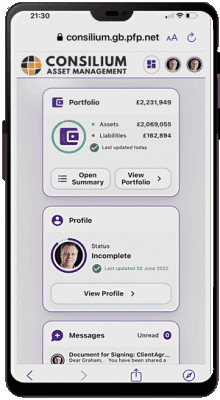
Ways That Our Investment Advice Can Help You
Many of us start investing with little to no knowledge of what to do, what kind of products to choose, and what strategies to employ. When people start learning, they find that asset classes are difficult to grasp, the performance often doesn’t make sense, and the outcomes of certain investments are impossible to predict. No one is to blame for this lack of knowledge since investment is not something easily taught.
At Consilium Asset Management, we don’t just give you recommendations on where to invest, we provide the education you need to address the knowledge gap mentioned above. While we place money in funds that suit your needs, we also provide coaching and guidance. That way, you’ll understand the reasoning behind our actions and get an in-depth understanding of the process.
Start your Journey…
Book a Call
The initial call enables us to find out more about you and how we might be able to help you. The meeting is provided at our expense and there is no obligation on your part.
Overall Risk Profile: Deciding How Much Risk To Take
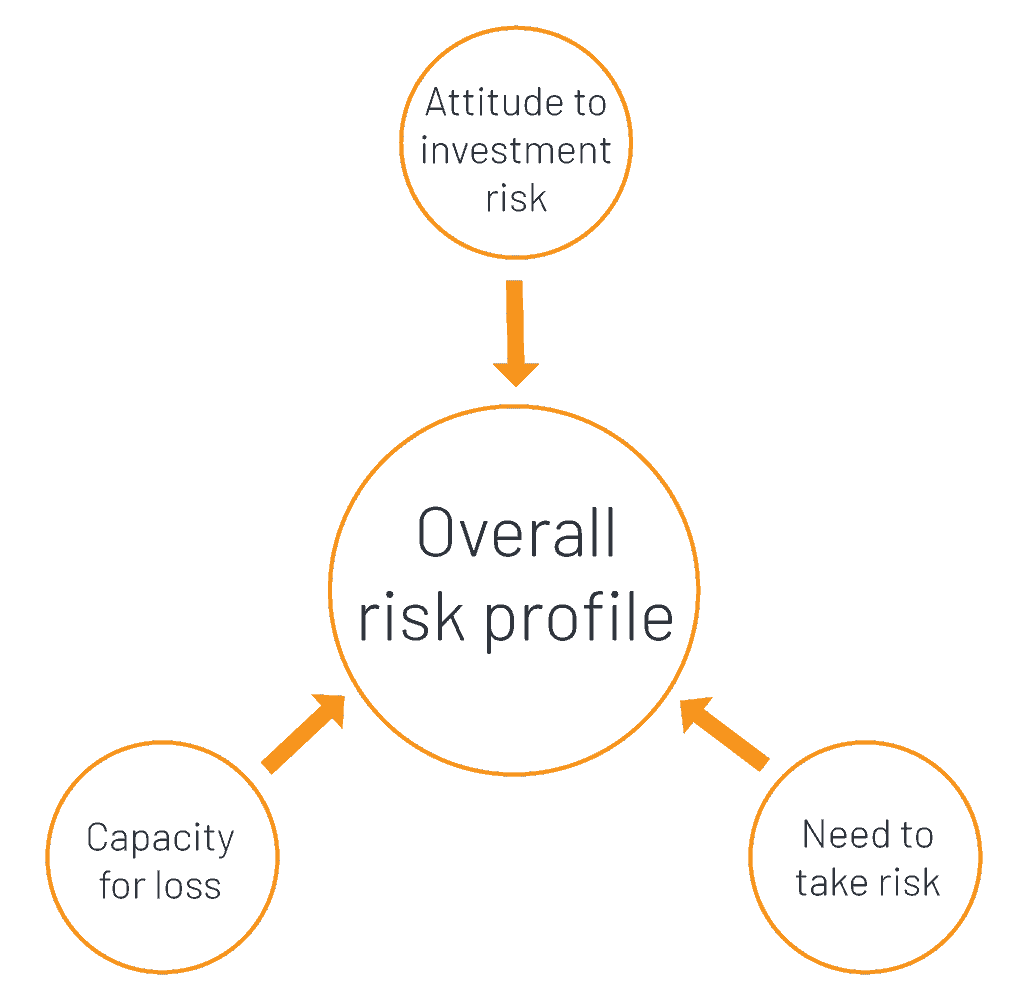
One of the most essential aspects of investing we focus on is managing risk, which is the uncertainty that could result in financial loss. Those just starting in investment take too much risk or have a lax attitude to risk. Thankfully, you have us to provide insight on how much risk you should take. Here are three factors we consider:
- Attitude to investment risk: This metric measures how comfortable you are with certain levels of risk. We’ll assess your feelings during economic turmoil or downturns and come up with a definitive score.
- Capacity for loss: How much are you willing to lose based on your current financial situation? Those with more savings have a high capacity for loss, and the inverse is true for those who might be financially struggling.
- Need to Take Risk: This score is based on the returns you need to reach your financial goals.
Based on your scores from these factors, we’ll arrive at your overall risk profile. We use this value to create the right kind of portfolio for you. In addition, we’ll also try to understand your attitudes toward sustainable investing. That way, we can design a portfolio with investments that positively contribute to our society.
Our area of expertise
As part of our mission to educate clients, we also provide investment advice on various investment products and approaches available today. Here are some of the investment topics we discuss with investors.
Fixed-income Investments
Investing in bonds is one of the most well-known approaches to investment. However, it’s just one of the many types of fixed-income investments. These securities pay investors fixed dividend payments until they mature, hence the name. Bonds, money market funds, and certificates of deposit (CD) accounts are examples of fixed-income investments. These all preserve capital and income, so they come with less risk than stocks.
Along with the lower risk are lower returns, a fact you must understand if you want to invest in bonds and other fixed-income investments. However, a diversified portfolio may still help you achieve your financial goals even with low-return investments.
Tax-free Investments
Getting dividends from your investments means that you’re also earning income, and with income comes taxes. Thankfully, there are certain types of investments that help you avoid taxes for capital gains or dividends. Others are more tax-efficient, so you won’t need to pay a large amount. Some examples of these are municipal bonds and tax-exempt mutual funds. We’ll provide the advice and guidance you need to get started on a tax-free investment.
Investing for Income
There are a few ways you can make money from investments. One of the most well-known is the return of capital and interest, a one-time payout after an investment reaches maturity. However, you can also invest to receive consistent and regular income. We can help you find products that let you invest for income so you can get dividends monthly, annually, or at whatever frequency you prefer.
Investment Criteria
Not all types of investments are the same. At Consilium Asset Management, we can help you create your own investment criteria so you can determine the best types of products to invest in. Having these requirements will help you assess investment opportunities and eliminate ones that do not fit your financial goals.

Work With Consilium Asset Management for Smarter Investing
The Consilium Asset Management is your team of experienced financial planners based in Bristol, UK. We offer an array of services, but our specialty is financial advice. In particular, we can help you make smarter investing choices by providing guidance, recommendation, and education about the topic. Start your journey to financial security by booking a call!
Help Guidance and Advice
Money Helper
Money Helper is the Government sponsored and provides information on most kinds of financial advice. However, it only offers guidance and not financial advice.
Money Helper Website
Do you have an Investment Question?
We are happy to help if you have questions about your Investments and your situation. We are open normal working hours Monday to Friday, 9:00 am to 5 pm
Call us on 01454 321511
Alternatively, you can email us

Investment Advice
Many of our clients are based in Bristol, Bath and South Gloucestershire. However, we also deal with clients throughout the South West and the UK. If you are looking to invest or need a review of your existing investment portfolio we can help you.
We provide advice on all aspects of Investments apart from Crypto based Assets. .